RTX PRO 6000 or Four RTX PRO 4000s? Local LLM Benchmarks on Blackwell
We benchmarked one RTX PRO 6000 Blackwell against four RTX PRO 4000 Blackwell cards, both 96 GB, running Qwen3.8-27B on vLLM. The single card served 22% more text to 32 users on 300 W instead of 551 W.
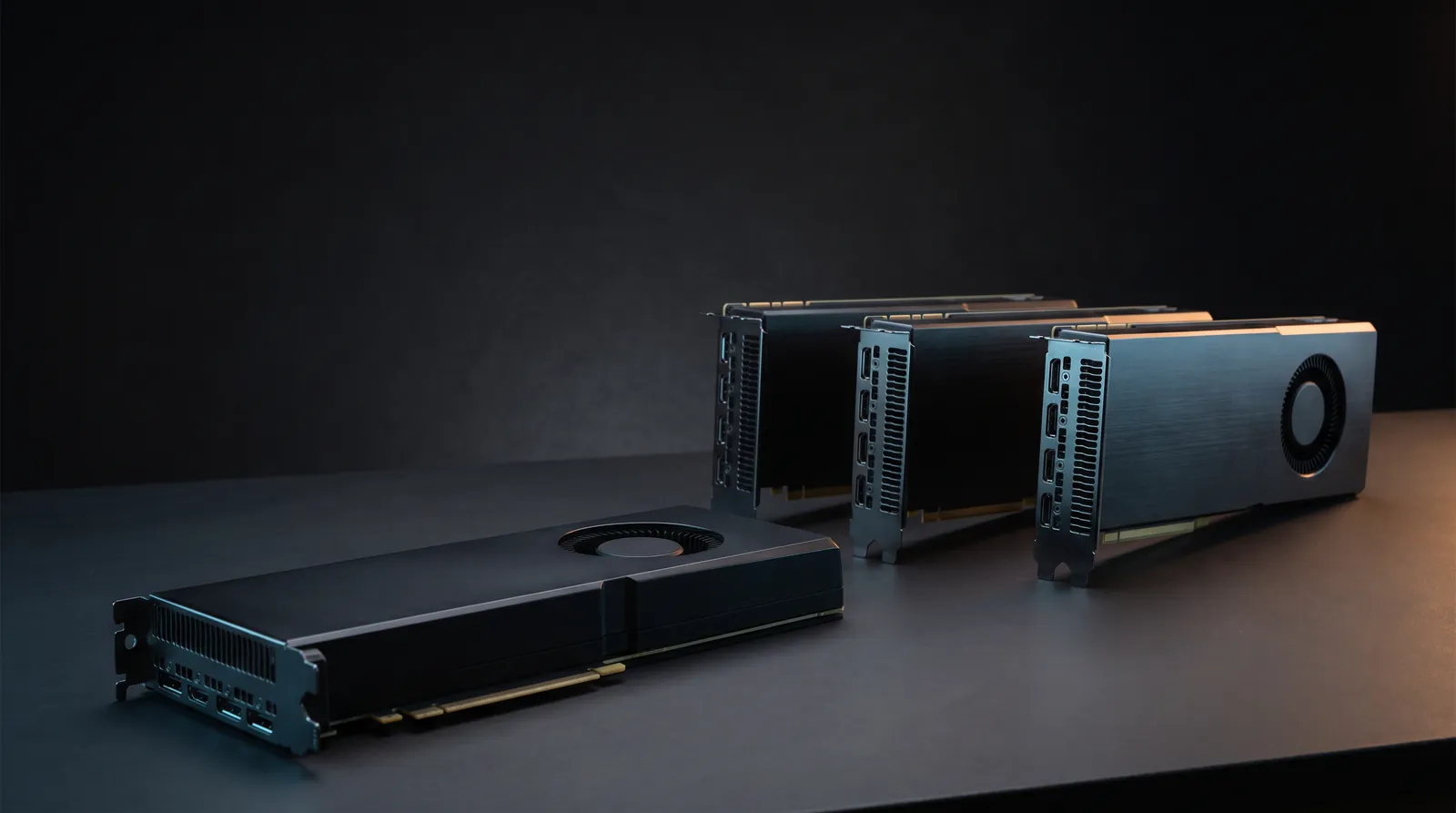
One RTX PRO 6000 Blackwell is the better local LLM machine than four RTX PRO 4000 Blackwell cards, for most teams. Both give you 96 GB of VRAM. In our tests the single card served 22% more text to 32 users at once, held 1.8× more context, and did it on 300 W instead of 551 W. Four RTX PRO 4000s were 8% faster for a single user, and cost less to buy.
We built and benchmarked both machines in September 2026, running the same model on the same software. This post is what we measured, what surprised us, and which one we would buy for which job.
What we tested
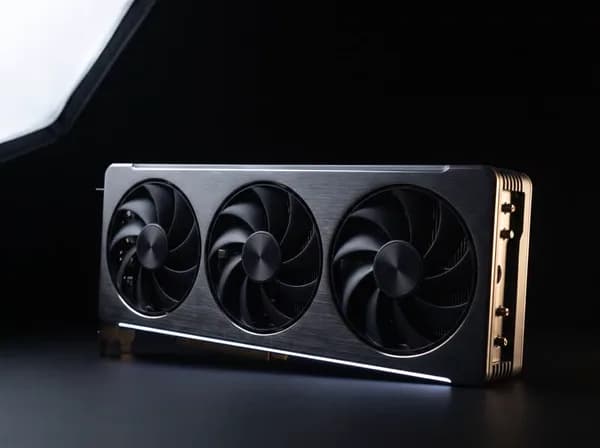
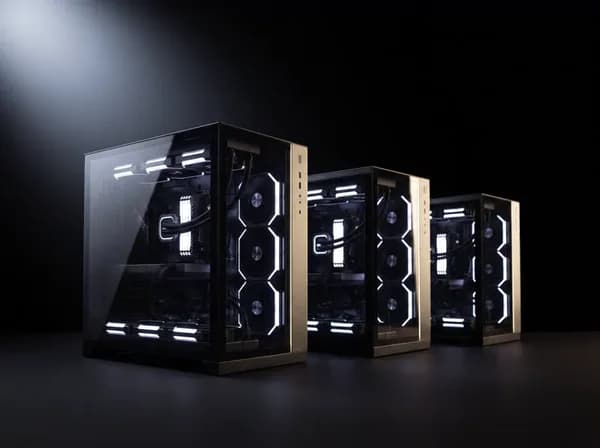
Both machines run NVIDIA's Blackwell workstation GPUs, the professional cards that replaced the RTX Ada generation. The difference is how they reach 96 GB:
| Machine A | Machine B | |
|---|---|---|
| GPUs | 4 × RTX PRO 4000 Blackwell | 1 × RTX PRO 6000 Blackwell Max-Q |
| VRAM | 4 × 24 GB = 96 GB | 96 GB on one card |
| Memory bandwidth (NVIDIA spec) | 672 GB/s per card | 1,792 GB/s |
| Rated power (NVIDIA spec) | 145 W per card, 580 W total | 300 W |
| CPU | Threadripper 7960X, 24 cores | Threadripper PRO 9965WX, 24 cores |
| Linking the GPUs | PCIe only, no NVLink | Nothing to link |
The model was Qwen3.8-27B, a 27.8-billion-parameter open-weight model, in NVIDIA's 4-bit NVFP4 build (21.9 GB). It was served with vLLM 0.29 on Ubuntu, using the model's built-in multi-token prediction (MTP) to draft three tokens ahead, and an 8-bit (FP8) KV cache. Every speed test used the same 40 real prompts (coding, technical explanation, writing), each producing exactly 512 tokens, at 1, 8 and 32 simultaneous users.
"Tokens per second" is how fast text comes out. Around 10–15 tok/s is reading speed; anything above 40 feels instant.
The numbers that matter
| Measure | 4 × RTX PRO 4000 | 1 × RTX PRO 6000 Max-Q |
|---|---|---|
| One user, generation speed | 134 tok/s | 124 tok/s |
| One user, time to first word | 54 ms | 46 ms |
| 8 users, total output | 726 tok/s | 790 tok/s |
| 32 users, total output | 1,441 tok/s | 1,752 tok/s |
| 32 users, speed each person sees | ~45 tok/s | ~63 tok/s |
| Context the cache can hold | 940,203 tokens | 1,711,990 tokens |
| Power under sustained load | 551 W | 300 W |
| Output per watt, 32 users | 2.62 tok/s/W | 5.84 tok/s/W |
| Peak GPU temperature | 86 °C | 81 °C |
| Hard maths + code (16 items) | 14 / 16 | 13 / 16 |
The quality line is noise, not a difference: it is the same model file, and a 16-item test cannot separate one item. Both passed all 15 baseline maths problems and all 6 baseline coding tasks, graded by running the code against unit tests.
Why one big card beats four small ones under load
Four GPUs split every layer of the model between them and have to exchange results after each of the model's 64 layers, for every token. Without NVLink that traffic crosses PCIe, and it gets heavier as more users are served. A single card never pays it.
The single card also gets more usable memory out of the same 96 GB. Four separate processes each reserve their own working buffers, so Machine A had 940K tokens of cache against 1.7 million on Machine B. More cache means more conversations in flight, which is where the throughput gap comes from.
Four cards win only one thing: a single user, because each card reads a quarter of the weights in parallel. That lead is 8%.
Long documents
Both machines held a fact hidden at 10%, 50% and 90% depth in documents up to about 250,000 tokens and returned it exactly, 12 out of 12 times on each.
The cost of a long document is reading it, not holding it. On the RTX PRO 6000, the first question about a 128,000-token document took 70 seconds; each follow-up took 2.2 seconds, because vLLM keeps the processed document in cache. At that size, repeat questions were 33× faster on the single card and 39× faster on the four-GPU machine.
One setting mattered more than any other: the KV cache precision. With an 8-bit cache instead of 16-bit, the RTX PRO 6000 generated at 96 tok/s with 240K tokens of context, against 14 tok/s, with no loss in recall. The four-GPU machine showed the same collapse (142 against 18 tok/s at 250K). If you run long context, set --kv-cache-dtype fp8.
Settings that changed the result
These held on both machines:
- Multi-token prediction: turning on MTP with 3 draft tokens took the RTX PRO 6000 from 65 to 124 tok/s for one user (+90%), and the four-GPU machine from 77 to 127 (+64%) before its platform fix.
- 4-bit against 8-bit weights: the NVFP4 build was 29% faster than FP8 on the RTX PRO 6000 (124 against 96 tok/s) and 44% faster on the four-GPU machine (134 against 93), with identical baseline maths and code scores.
- Engine choice: on the four-GPU machine, a desktop app (LM Studio) served the same model at 35 tok/s for one user and 101 tok/s total for 32 users, against 1,441 on vLLM. The answers were the same quality. A desktop app is fine for one person, and the wrong tool for a team.
What we had to fix before benchmarking
Neither machine was ready out of the box, and this is the part most buyers never see.
On the four-GPU machine, direct GPU-to-GPU copies silently returned zeros, with no error, because the IOMMU was blocking peer-to-peer transfers. Two-GPU runs hung; four-GPU runs quietly routed through system RAM. Setting iommu=pt at boot and NCCL_P2P_LEVEL=SYS fixed it, and raised 8-user throughput by 33%. Two of the four slots also ran below full PCIe speed, which you only find by measuring.
On the single-card machine, none of that exists, since there is one GPU. Instead vLLM would not start: this model's hybrid attention needs kernels compiled on first launch, and the CUDA compiler bundled inside the Python packages was a mix of versions. Pinning the toolkit packages to one version fixed it. The first start then took 406 seconds of compiling; every start after that took about 80.
What it means for you, by budget
Listed prices at Indian retailers in September 2026 were about ₹2.06–2.15 lakh for an RTX PRO 4000 Blackwell and ₹13–16 lakh for an RTX PRO 6000 Max-Q, and both were out of stock at the stores we checked. Treat these as a guide, not a quote. GPU prices in this class move month to month.
- Around ₹2 lakh of GPU (one RTX PRO 4000, 24 GB): this 27B model's weights alone are 21.9 GB, which leaves no room for context. Plan on a smaller model, or a different card.
- Around ₹4–4.5 lakh (two RTX PRO 4000s, 48 GB): it runs, at 89 tok/s for one user, but with only 123K tokens of cache: fewer than two long conversations at once. Good for one or two people, not a team.
- Around ₹8.5 lakh (four RTX PRO 4000s, 96 GB): the cheaper route to 96 GB, and the fastest for one user. Budget for a Threadripper board with four full-speed slots, 580 W of GPU power and serious airflow, and have whoever commissions it verify GPU-to-GPU copies first.
- Around ₹13–16 lakh (one RTX PRO 6000 Max-Q, 96 GB): more throughput for a team, nearly twice the context, just over half the power, and no multi-GPU setup to get wrong. It also leaves room to add a second card later.
The GPUs are only part of the cost; the platform around four cards is bigger and more expensive than the platform around one. Our custom PC builds include this conversation, and a dated quote is the honest way to compare the two at today's prices. You can see what we have built recently on recent builds, and our AI workstation builds page covers the platforms.
When the honest answer is "don't"
- One person, chatting with a model: you do not need a 96 GB machine built for throughput. Speed is not the problem for one user: even the slow desktop-app setup gave one person 35 tok/s, faster than anyone reads.
- Your data lives in spreadsheets: more context will not help. We asked both machines ten questions about a 50,037-row CSV. Pasting rows into the prompt got at most 2 of 10 right, because only about 7% of the file fits in 262K tokens. Having the model write pandas code got 10 of 10 on both, in about 5–6 seconds each.
- You think you need a much bigger model: a 180B model at 3-bit fit only 55 of its 79 GB in VRAM on the four-GPU machine, ran at 67 tok/s for one user against 134, and beat the 27B by a single item on our 16-item hard suite. Test your own tasks before paying for size.
- You cannot give the machine a proper cooling and power setup: the four-card box drew 571 W at peak and reached 86 °C. Under a desk with poor airflow, that becomes throttling.
We also ran three multi-step analysis tasks through an open-source agent (Hermes Agent) on the four-GPU machine, three runs each. All nine runs finished without help, taking 3 to 12 minutes, and the same task varied by up to 2.2× in time between runs. If you evaluate agents, run each task more than once.
Summary
- Same 96 GB, different machines: one RTX PRO 6000 Max-Q served 1,752 tok/s to 32 users against 1,441 from four RTX PRO 4000s, on 300 W against 551 W.
- Four smaller cards win one case: a single user, by 8% (134 against 124 tok/s).
- The single card holds 1.8× more context, 1.7 million tokens against 940K.
- Set the KV cache to FP8 and turn on MTP. Together they were worth more than the difference between the two machines.
- Verify multi-GPU machines before trusting them. Ours silently corrupted GPU-to-GPU copies until one boot setting was changed.
- For spreadsheets, have the model write code. Context length is the wrong lever.
- Limits: one model, one engine, 512-token outputs, and the two machines were tested on different days (19 and 22 September 2026). Read the comparisons as indicative, not a controlled lab result.
Sources, checked 23 September 2026: all performance, power and quality figures were measured by NVSX on the two machines described, with vLLM 0.29.0 and the nvidia/Qwen3.8-27B-NVFP4 checkpoint. GPU specifications from NVIDIA: RTX PRO 6000 Blackwell Max-Q and RTX PRO 4000 Blackwell. Indian retail prices from listings at Computech Store (RTX PRO 6000 Max-Q, ₹13,04,999), Computech Store (RTX PRO 4000, ₹2,14,999) and Ads Store (RTX PRO 4000, ₹2,05,999), all out of stock when checked. Serving engine: vLLM.